Real Estate Experts in DC, MD & VA

News

New Home Sales Surge in the DMV
Real Estate News

New Home Sales Surge in the DMV: What Buyers Need to Know in 2025

New Home Sales Surge in the DMV: What Buyers Need to Know in 2025

The Washington, D.C., Maryland, and Northern Virginia housing markets are seeing a similar trend to national data: a persistent shortage of resale homes is pushing buyers toward new construction, driving sales upward across the DMV.

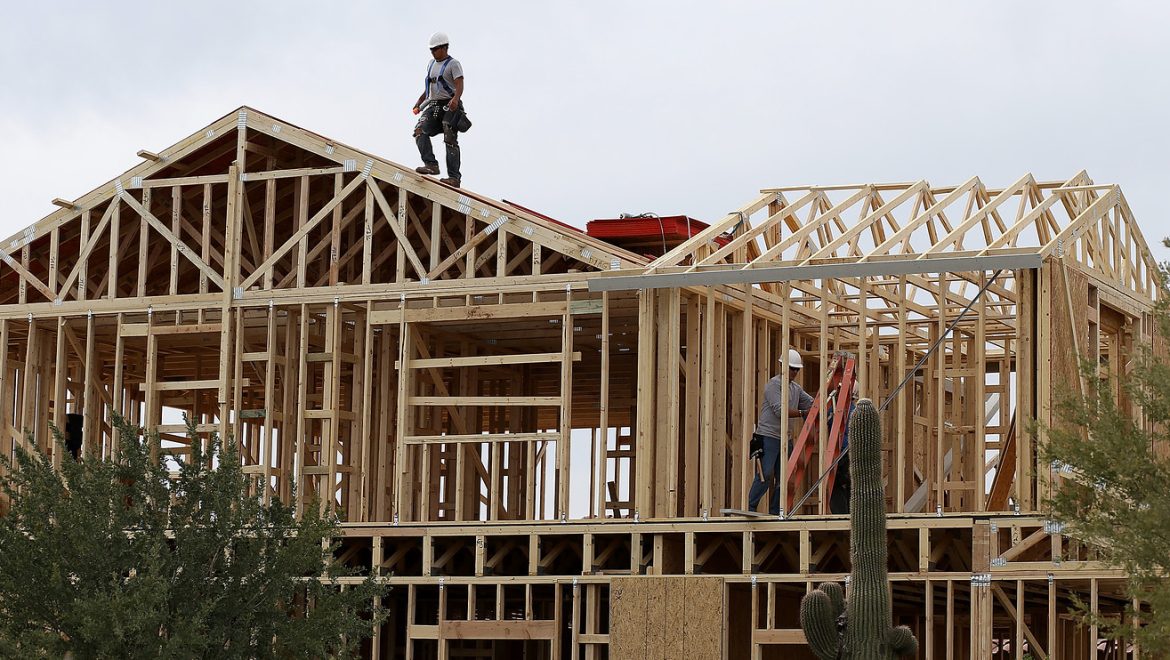
New Construction on the Rise

Local builders in Northern Virginia, Montgomery County, Fairfax, and Prince William are reporting strong demand for new homes, as buyers struggle to find options in the resale market. Low inventory is limiting choices, giving builders a distinct advantage.

National Context Supports Local Trends

Nationally, U.S. new home sales increased 4.1% in April to a 683,000 annual rate, surpassing Wall Street expectations. This marks the highest level of new construction since March 2022, reflecting both high buyer demand and low resale inventory.

Price Trends

The median sales price for new homes nationally fell to \$420,800 in April, down from a peak of $496,800 last October. While DMV prices remain higher than the national average, buyers are seeing competitive pricing and builder incentives that make new homes attractive despite high mortgage rates.

Inventory Challenges

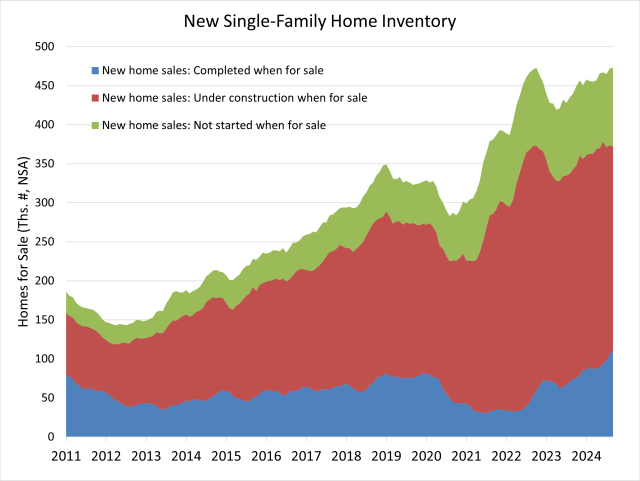
The supply of new homes for sale is tight, with only about a 7.6-month supply nationally. In the DMV, limited options for existing homes have amplified demand for new builds, prompting developers to offer perks such as mortgage rate buydowns, upgrades, and closing cost assistance.

Why This Matters for DMV Buyers

Builders are benefiting from low resale inventory and strong buyer interest, making new homes a significant part of the market. In the DMV, where traditional single-family resale homes are scarce, new construction now represents a larger share of overall sales, giving buyers opportunities to secure modern homes with customizable features.

Expert Insights

Lisa Sturtevant, chief economist at Bright MLS, notes that while new single-family homes normally account for less than 10% of sales, this year their share has risen to about 14% in the spring. Neil Dutta of Renaissance Macro Research adds that builders continue to leverage incentives to attract buyers, a strategy that may continue as long as resale inventory remains limited.

What Buyers Should Do

For homebuyers in Northern Virginia, Montgomery County, Fairfax, and other DMV areas:

Explore new construction options early to avoid missing out.
Compare builder incentives like rate buydowns or upgrades.
Work with local realtors experienced in new home transactions.
Monitor mortgage rates closely—currently hovering just below 7% for a 30-year fixed.

Bottom Line

Despite high mortgage rates, low resale inventory, and rising demand have created opportunities for buyers have been created in the DMV market. For those looking for modern homes, customizable layouts, and competitive pricing, new construction is emerging as a smart alternative to the tight resale market in 2025.

Why Now Is the Time to Work With a Realtor
Real Estate News

Why Now Is the Time to Work With a Realtor: Navigating Today’s Housing Market

The numbers:

Sales of previously-owned homes in the U.S. fell 3.4% in April for the second month in a row, as buyers continue to deal with low levels of home listings and see-sawing mortgage rates.

Sales of existing homes in the U.S. fell to an annual rate of 4.28 million in April, the National Association of Realtors said Thursday.

That’s the number of homes that would be sold over an entire year if sales took place at the same rate in every month

The U.S. housing market continues to make headlines. According to the National Association of Realtors (NAR), sales of previously-owned homes fell 3.4% in April, marking the second consecutive monthly drop. Existing home sales now sit at an annual rate of 4.28 million, down 23.2% from April 2022.

While some might see this as a sign to wait, savvy buyers and sellers know that today’s market is full of opportunity for those who act strategically.

Home Prices: A Temporary Dip With Opportunity

The median price for an existing home fell by 1.7% to $388,800, the largest drop since January 2012. After the historic peak in May 2021, when home prices grew over 25% annually, this adjustment is giving buyers a window to purchase without the extreme premiums seen during the pandemic.

Sellers, on the other hand, can still capitalize on historically strong equity in many regions, even amid cooling prices. With proper strategy and expert guidance, homeowners can maximize returns while navigating volatile mortgage rates.

Inventory Is Still Tight

Despite a 7.2% increase in homes on the market, fresh listings remain below last year’s levels, and homes are selling fast—average days on market dropped to just 22 days. Limited supply keeps competition high, particularly in hot DMV areas like DC, Northern Virginia, and Maryland suburbs.

This is where working with an experienced realtor is crucial: I can help you spot hidden inventory, leverage off-market opportunities, and act quickly before another buyer snatches your dream home.

Mortgage Rates Are See-Sawing

Mortgage rates recently climbed to 6.57%, the highest level in two months. While some buyers hesitate due to rising rates, lock-in strategies, rate buy-downs, and financial guidance can help make homeownership attainable even in today’s climate.

Why You Need a Realtor Now

First-time buyers account for just 29% of purchases, so expert guidance ensures you’re competitive.

Investors and second-home buyers still make up 17% of sales, creating opportunities for savvy market moves.

All-cash buyers dominate 28% of transactions—without professional support, competing in this market can be daunting.

Working with a realtor gives you the edge to navigate tight inventory, volatile rates, and competitive bidding.

Looking Ahead

Economists expect a gradual recovery, supported by rising housing starts and strong labor market conditions. Still, uncertainty remains, making timely decisions critical. Those who wait may find limited options or higher prices as demand persists.

Take Action Today

The housing market may feel unpredictable, but with the right strategy, you can win whether buying, selling, or investing. I specialize in helping clients in the DMV area—from DC to Northern Virginia and Maryland—capitalize on opportunities and avoid costly mistakes.

If you’re ready, willing, and able to make a move, there’s no better time to partner with a realtor who knows the market and will fight for your advantage.

📞 Contact me today to explore the best properties, secure competitive financing, and make your move before the next wave of buyers does.

Has it been done in April? The numbers are seasonally adjusted.

The drop in sales wasn’t as bad as what economists on Wall Street had expected. They forecast existing-home sales to total 4.26 million in April.

But compared with April 2022, home sales were down 23.2%.

Key details:

The median price for an existing home fell by 1.7% from last April to $388,800 this year. The drop is the largest since January 2012, when home prices fell 2%.

Home prices peaked in May 2021, where they grew 25.2% annually.

The number of homes on the market rose by 7.2% in April to 1.04 million units. But the number of fresh listings is still down from a year ago, the NAR said.

Homes listed for sale remained on the market for 22 days on average, down from 29 days in March.

Sales of existing homes fell in all regions, with the sharpest drop in the West.

All-cash buyers made up 28% of sales. The share of individual investors or second-home buyers was 17%. About 29% of homes were sold to first-time home buyers.

Big picture:

Despite home sales dipping in April, most of the housing data indicate that the U.S. housing market is in broad recovery.

But a combination of issues is making it a slow one, from a lack of new home listings to see-sawing mortgage rates.

Many homeowners are reluctant to sell for two reasons: They may be reluctant to give up an ultra-low mortgage rate secured during the pandemic for a much higher one, and they also don’t want to deal with competition

Homebuilders are responding to the inventory crunch by bumping up construction of new homes. Housing starts, which refer to when a builder starts constructing a home, rose in April. Rates, on the other hand, are volatile: The 30-year mortgage rose to the highest level in two months to 6.57% as of May 12, the Mortgage Bankers Association said on Wednesday. It was 6.48% the previous week.

Given the underlying issues on supply and rates, sentiment among U.S. consumers regarding the housing market has worsened: The number of people who think it’s a bad time to buy a home has hit a 45-year high.

What the realtors said:

“The housing market–at least home sales–is still struggling to recover,” Lawrence Yun, chief economist at the National Association of Realtors, said.

Aside from higher rates, “there’s just simply not enough inventory,” he noted.

Yun also said that the NAR was sharing the idea of addressing the capital gains tax with members of Congress as a way to encourage more homeowners to sell their homes to ease the inventory shortage.

What are they saying?

“The very strong underwriting standards during the last housing expansion, along with solid labor market conditions, will reduce the risk of defaults and forced selling going forward,” Thomas Simons, U.S. economist at Jefferies, wrote in a note.

“The housing sector is already in a recession, but we don’t expect consumption to contract significantly until a cycle of mass layoffs begins, likely during Q3,” he added.

Market reaction:

Stocks were up in early trading on Thursday. The yield on the 10-year note rose above 3.6%.

Home Prices Rise, Squeezed by Fewer Listings, Case-Shiller Index Finds
Real Estate News

Home Prices Rise, Squeezed by Fewer Listings, Case-Shiller Index Finds

The numbers:

Home prices rose in March as sellers held out on listing their homes, constraining supply.

Despite elevated mortgage rates, the S&P CoreLogic Case-Shiller 20-city home-price index rose 0.5% in March, as compared with the previous month.

Home prices were strongest in the Southeast, while prices in the West continued to drag. Though buyer demand has outpaced supply in March, surging mortgage rates may dampen home sales. The rate for the 30-year mortgage in May is over 7%, according to Mortgage News Daily.

Year-over-year appreciation was down 1.1%, a dip after home prices rose 0.4% in February. The 20-city index peaked in June 2022.

A broader measure of home prices, the national index, rose 0.4% in March compared with February and was up 0.7% over the past year.

All numbers were seasonally adjusted.

Key details:

Cities in the Southeast led home price growth. Miami and Tampa in Florida and Charlotte, N.C., were the three cities with the highest year-over-year gains among the 20 cities in March.

Cities on the West Coast, from Seattle to San Francisco, continued to see weak home-price growth. Home prices in Seattle were down 12.4% from last March.

City      Price change from March 2022 to March 2023

Atlanta 4.5%
Boston 0.8%
Charlotte 4.7%
Chicago 4.0%
Cleveland 2.0%
Dallas -1.2%
Denver -3.6%
Detroit 1.2%
Las Vegas -5.1%
Los Angeles -2.9%
Miami 7.7%
Minneapolis 0.5%
New York 3.3%
Phoenix -4.5%
Portland -4.6%
San Diego -5.3%
San Francisco -11.2%
Seattle -12.4%
Tampa 4.8%
Washington -0.2%
Composite-20 -1.1%

A separate report from the Federal Housing Finance Agency also showed home prices rising in March, up 0.6% from February.

And over the last year, the FHFA index was up 3.6%.

Big picture:

The housing market is being squeezed by a lack of supply.

There aren’t enough homes listed for sale on the market, as home sellers see no incentive in giving up their ultralow mortgage rates for a new home loan with a 7% rate.

But rising rates could soon dampen demand as well, as buyers may find rising costs prohibitive to purchasing a home.

The housing sector is trying to boost both demand and supply: While home builders add to supply with new construction, which has boosted sales of new homes, mortgage lenders are also offering incentives, such as buyers only having to make a 1% down payment. The National Association of Realtors is proposing changes to existing tax policy to boost supply.

What S&P said:

“Two months of increasing prices do not a definitive recovery make, but March’s results suggest that the decline in home prices that began in June 2022 may have come to an end,” Craig J. Lazzara, managing director at S&P DJI, said.

“That said, the challenges posed by current mortgage rates and the continuing possibility of economic weakness are likely to remain a headwind for housing prices for at least the next several months,” he added.

Market reaction:

Stocks were mixed in early trading on Tuesday. The yield on the 10-year Treasury note rose above 3.7%.

Pending Home Sales Signal Cautious Optimism in Today’s Housing Market
Real Estate News

Pending Home Sales Signal Cautious Optimism in Today’s Housing Market

Pending Home Sales Signal Cautious Optimism in Today’s Housing Market

The latest data on U.S. Pending Home Sales—contracts signed but not yet completed—paints a nuanced picture of the current housing market, offering both challenges and opportunities for buyers, sellers, and investors.

Nationwide Trends and Leading Indicators

In July 2025, the Pending Home Sales Index edged down 0.4% month-over-month but rose 0.7% year-over-year**—a subtle sign that, despite ongoing hesitations, contract signings are beginning to stabilize.
(National Association of REALTORS)

Regionally, while the Northeast and Midwest saw slight declines, conditions held steady in the South, and the West experienced modest gains.
(National Association of REALTORS®)

Back in May, pending home sales delivered a needed boost after April’s sharp slide, rising 1.8% month-over-month and 1.1% year-over-year. Economic momentum—from wage gains to rising inventory—contributed to this soft rebound.
(Atlanta Agent Magazine), [HousingWire)

However, the decline in April’s pending contracts, which dropped 6.3%, highlighted the market’s sensitivity to increasing mortgage rates and economic uncertainty.
(Reuters)

What This Means for Buyers & Sellers

For Buyers: The slight uptick in pending sales suggests there are motivated sellers and opportunities—provided you’re ready to act quickly.
For Sellers: Even with carefully timed pricing and marketing, transactions are taking longer as buyers scrutinize each decision more closely.

As NAR Chief Economist Lawrence Yun notes, “buyers remain hesitant… Buying a home is the most expensive purchase people make. They take their time.”
(National Association of REALTORS)

Why You Need a Savvy Realtor Now

Navigate Volatility: With slight bounce-backs in contract activity, a skilled agent can help you identify real opportunities—even in tight inventory markets like DC, Northern Virginia, or Maryland.
Act with Confidence: Whether you’re buying or selling, executing with precision can make all the difference.
Leverage Market Looseness: As inventory grows and mortgage pressures ease, this is your moment to negotiate—or strike—while the market softens.

Key Data at a Glance

| Metric | Value |
| ————————- | —– |
| July Pending Sales (MoM) | –0.4% |
| July Pending Sales (YoY) | +0.7% |
| May Pending Sales (MoM) | +1.8% |
| April Pending Sales (MoM) | –6.3% |

Final Thought: Patience Pays, but Timing Wins

The pending home sales data signal a market in transition—slowing, flattening, and slowly awakening. For buyers and sellers who are “ready, willing, and able,” this creates a window to act with purpose and clarity and make decisions that yield the best results.

Let me help you navigate this complex market with confidence. Whether you’re looking to buy or sell, my expertise ensures you capitalize on momentum—and avoid missteps—as the housing market continues to evolve.

U.S. New Home Sales Surge in May for Third Straight Month
Real Estate News

U.S. New Home Sales Surge in May for Third Straight Month

U.S. New Home Sales Surge: A Golden Opportunity for Buyers and Sellers Alike

In a surprising twist, the U.S. housing market is showing signs of resilience. After a period of uncertainty, new home sales have experienced a notable uptick, presenting unique opportunities for both buyers and sellers.

New Home Sales on the Rise

According to the latest data from the U.S. Census Bureau and the Department of Housing and Urban Development, new single-family home sales in July 2025 were at a seasonally adjusted annual rate of 652,000 units. While this marks a slight decline from June’s rate of 656,000, it’s important to note that June’s figures were revised upward from an initial estimate of 627,000. This upward revision indicates a stronger-than-expected market performance. (Census.gov)

On a year-over-year basis, new home sales in July were 8.2% lower than the same month in 2024. However, this decline is less steep than anticipated, suggesting a stabilization in the market.

Pricing Trends and Inventory Levels

The median sales price of new homes in July was $403,800, down 0.8% from June’s $407,200. This price dip, coupled with a 5.9% year-over-year decrease, may signal more favorable conditions for prospective buyers. (Census.gov)

Inventory levels have also seen an uptick, with 499,000 new homes for sale at the end of July, a 7.3% increase from the previous year. This rise in inventory provides buyers with more options and can contribute to a more balanced market. (Census.gov)

Regional Insights

Regional disparities continue to shape the housing landscape. The West experienced an 11.7% increase in new home sales, indicating robust demand in that area. Conversely, the Midwest and South saw declines of 6.6% and 3.5%, respectively. These regional variations highlight the importance of localized market knowledge. (Reuters)

Navigating the Market

For buyers and sellers in the Washington, D.C., Virginia, and Maryland areas, these national trends underscore the importance of strategic decision-making:

Buyers: With increased inventory and more favorable pricing, now may be an opportune time to enter the market.

Sellers: While the market shows signs of stabilization, pricing your home competitively and understanding regional dynamics are crucial for a successful sale.

Whether you’re looking to buy or sell, having a knowledgeable realtor can make all the difference. I am here to provide expert guidance tailored to your specific needs and the nuances of our local market.

Beach Front Property
Real Estate News

‘The Housing Recession Is Over,’ Real-Estate Group Says, as Pending Home Sales Tick Up for the First Time in 4 Months

The numbers:

Home sales inched up for the first time in four months, even as the U.S. housing market continues to deal with a dearth of listings.

Pending home sales rose by 0.3% in June from the previous month, according to the monthly index released Thursday by the National Association of Realtors.

The figure exceeded expectations on Wall Street. Economists were expecting pending home sales to fall 0.5% in June.

Transactions were still down 15.6% from last year.

Pending home sales reflect transactions where a contract has been signed for the sale of an existing home but the sale has not yet closed. Economists view it as an indicator of the direction of existing-home sales in subsequent months.

Big picture:

Home sales rose as the housing market contends with excess buyer demand and a shortfall in the supply of homes for sale.

Real-estate agents are looking to home builders to fill the gap as rate-locked homeowners hold out on selling. New-home sales surged in May, and while they lost some momentum in June, the broader trend is still upward.

The prices of new homes, which are generally seen as more expensive, are also coming down. The gulf between the median price of a new home and of an existing home narrowed in June, based on data from the NAR and the federal government.

What the real-estate experts said: “The recovery has not taken place, but the housing recession is over,” NAR chief economist Lawrence Yun said. “The presence of multiple offers implies that housing demand is not being satisfied due to lack of supply.”

The NAR also said it expects rates for 30-year mortgages to average 6.4% this year and to fall to 6% in 2024.

The NAR also expects existing-home sales to fall 12.9% in 2023 from the previous year, to 4.38 million, before recovering in 2024 to a rate of 5.06 million.

The group also expects home prices to hold steady this year, falling only slightly by 0.4% to $384,900, before rising 2.6% next year to $395,000.

“The West—the country’s most expensive region—will see reduced prices, while the more affordable Midwest region is likely to see a small positive increase,” Yun added.

U.S. Home Sales Fall in July to a Six-Month Low
Real Estate News

U.S. Home Sales Fall in July to a Six-Month Low

The numbers:

Higher mortgage rates and a persistent shortage of homes for sale pushed U.S. home sales down in July to a six-month low.

Sales of previously owned homes fell by 2.2% to an annual rate of 4.07 million in July, the National Association of Realtors said Tuesday.

That’s the number of homes that would be sold over an entire year if sales took pace at the same rate every month as in July. The numbers are seasonally adjusted.

Home sales in July were the lowest since January 2023. Sales activity for the month of July was the lowest since the so-called Great Recession.

‘The existing-home market remains moribund, as most homeowners are staying put, enjoying their 3% and 4% mortgages.’

Existing-home sales only fell to a lower annualized rate in January 2023, when they dropped to 4 million.

The monthly sales figure missed the mark set by economists on Wall Street. They forecast 4.15 million existing-home sales in July.

Compared with July 2022, home sales were down by 16.6%.

Key details:

The median price for an existing home in July was $406,700, up 1.9% from a year ago. Home prices peaked in June 2022, when the median price of a resale home hit $413,800.

Around 35% of properties are being sold above the list price, the NAR noted.

The total number of homes for sale in July fell by 14.6% from last July—to 1.11 million units. Housing inventory for the month of July, particularly of single-family homes, is at the lowest level since the early 1980s.

Homes listed for sale remained on the market for 20 days on average, up from 18 days in July. Last July, homes were only on the market for 14 days.

Sales of existing homes were only up in the West, by 2.7%. The median price of a resale home in that region was $610,500.

All-cash buyers were responsible for 26% of sales nationally. The share of individual investors or second-home buyers was 16%. About 30% of homes were sold to first-time home buyers.

The NAR forecast calls for U.S. existing-home sales of 4.38 million in 2023.

Big picture:

As the 30-year mortgage rate hovers around 7.5% in August, buyers are pulling back, and that’s likely to damage home-sales figures further, unless rates fall in the near term.

Even home builders, who don’t have the same inventory issues as the existing-home market, are concerned about rising rates and a drop in buyer traffic.

What the Realtors said:

“Two factors are driving current sales activity—inventory availability and mortgage rates,” Lawrence Yun, chief economist at the National Association of Realtors, said. “Unfortunately, both have been unfavorable to buyers.”

What are economists saying? “The existing-home market remains moribund, as most homeowners are staying put, enjoying their 3% and 4% mortgages, even as 30-year mortgage rates on current transactions exceed 7%,” Stephen Stanley, chief U.S. economist at Santander U.S. Capital Markets, wrote in a note. “The result is a dearth of homes on the market. “

Overall, “it feels like we are in for a period of low activity, a tight market, and therefore firm prices,” he added.

Market reaction:

Stocks were mixed in early trading on Tuesday. The yield on the 10-year note rose above 4.3%.

New construction
Real Estate News

New Home Construction on the Rise: 2025 Shows Signs of Momentum

The numbers:

New Home Construction on the Rise: 2025 Shows Signs of Momentum

The U.S. housing market is showing renewed energy in 2025, with significant increases in new home construction. While challenges remain, recent data offers optimistic signs for buyers, developers, and realtors alike.

Housing Starts Surge—Driven by Rental Demand

Builders responded to market demand by breaking ground on more housing in July:

Housing starts rose 5.2% month-over-month to 1.428 million units, surprising analysts with a strong rebound.
Compared to July 2024, starts climbed 12.9%, the largest annual increase since April 2022.
The multi-family segment led this push, up 11.6% MoM—the highest level since May 2023—while single-family starts rose 2.8%.

This surge was particularly pronounced in the South and Midwest, where demand and permits have been strongest.

Permits & Completions Tell a Cautious Tale

Despite rising starts, future activity remains subdued:

Building permits slipped 2.8% from June and are down 5.7% year-over-year, signaling a slowdown in future projects—especially multi-family plans.
Completions increased 6% from June but are still **13.5% below last year’s levels**, signaling that supply is not meeting demand.

Why Builders Are Both Active—and Cautious

Two forces are shaping home construction in 2025:

Trend | Impact

Rising Rental Demand | Fueled the surge in multi-family starts as homeownership remains challenging under high mortgage rates. |
Construction Headwinds | Tighter permits, elevated material costs, and weak builder sentiment are dragging on large-scale production. |

Realistic Outlook for the Year Ahead

The National Association of Realtors (NAR) forecasts a steadier outlook:

30-year mortgage rates are expected to average around 6.0% in 2025, which is expected to offer a return of buyer confidence.
1.45 million housing starts are projected—mostly single-family units—approaching long-run norms but still leaving a sizable supply gap.

What This Means for Buyers, Sellers & Realtors

Buyers benefit from increased options—especially in multi-family or new subdivisions—but should act consistently and consult a trusted realtor to stay ahead.
Sellers in high-demand markets can leverage the narrative that more new construction is on the way—creating urgency.
As a local real estate expert, you can connect clients with emerging neighborhoods and capitalize on the broader construction rebound.


Bottom Line

The U.S. housing market in 2025 isn’t booming—but it’s showing glimmers of strength in new home construction. While builder confidence remains fragile, rental demand and stabilizing rates are paving the way for growth.

Ready to tap into new-construction opportunities—whether you’re buying, selling, or investing? Let’s talk. I’m here to help you navigate this evolving market with precision and insight.

Contract Signings for U.S. Homes Drop in August to Lowest Level Since April 2020
Real Estate News

Contract Signings for U.S. Homes Drop in August to Lowest Level Since April 2020

The numbers:

Contract signings on U.S. homes fell sharply in August, as the housing market was hammered by high rates and a scarcity of home listings.

Pending home sales fell by 7.1% in August from the previous month, according to the monthly index released Thursday by the National Association of Realtors (NAR).

Pending home sales in August were at their lowest level since April 2020, at the height of the the coronavirus pandemic. Those two months were tied for the lowest level since the NAR began tracking the data in 2001.

The figure was sharper than what Wall Street expected. Economists were expecting pending home sales to fall 1% in August.

Transactions were down 18.7% from last year.

Pending home sales reflect transactions where the contract has been signed for the sale of an existing home, but the sale has not yet closed. Economists view it as an indication of the direction of existing-home sales in subsequent months.

Big picture:

Rates well into the 7% range in August, which may have slowed down buyer demand.

Resale homes have felt the brunt of high rates more so than home builders, who are able to offer lower rates on newly built homes.

But as rates head to new highs—at the end of September, rates went up to the highest level since December 2000—the overall housing market may likely feel even more pain before things turn around.

What the realtors said:

“It’s clear that increased housing inventory and better interest rates are essential to revive the housing market,” NAR Chief Economist Lawrence Yun said.

“The Federal Reserve must consider the sharply decelerating rent growth in its consideration of future monetary policy. There is no need to raise interest rates,” he added.

Yun also flagged that the government shutdown could disrupt home sales in the short run “due to the lack of flood insurance or delays in government-backed mortgage issuance.”

What they’re saying:

“August may be the beginning of the end of this resilient housing market—at least for a while,” Lisa Sturtevant, chief economist at Bright MLS, said in a statement.

“Buyers are hitting affordability ceilings, causing some of them to sit out the market. For others, the higher mortgage rates and general economic uncertainty are simply making them more cautious,” she added. “Either way, expect the number of home sales transactions this fall to be at a decade low.”

Market reaction:

Stocks were up in early trading on Thursday. The yield on the 10-year Treasury note rose above 4.6%.

MarketWatch, the place where you can find the latest stock market, financial and business news. Cryptocurrency is trending now, get the latest info on Bitcoin, Ethereum and XRP.

6 Things You Need to do Before the Movers Arrive
Moving

6 Surprising Things You Never Knew You Had to Do Before the Movers Arrive

Moving is stressful, so you’d be forgiven if after packing the last box you thought that you were finally done. Now it’s just time to wait for the movers to arrive, right?

Not exactly.

Working with professional movers is a great option for people making big moves, moving with kids, or moving large or fragile items that would be otherwise impossible to transport. But while many moving companies do a great job of providing end-to-end service, there are some things that only you can do to make the whole process run smoothly. Here’s our list of six surprising things you’ll need to do before the movers arrive in order to avoid disaster

1. Make a clear path

Whether you live in an urban apartment or a two-story house in the country, there are bound to be obstacles for your movers. By anticipating these issues before they happen, you can make everyone’s job easier, and possibly even save some money by taking up less of the movers’ time.

First, you should consider the parking situation outside your home. Where will the movers be able to leave their truck when packing up your stuff? If you do have that house in the country, this might not be an issue. But if you’re living in an apartment or urban area, chances are good that a huge double-parked truck won’t be taken very kindly by the neighbors.

“If you live in an apartment building or if there is limited parking in your area, ask the movers if they will handle the logistics or if you need to do so,” says Ali Wenzke, author of “The Art of Happy Moving.”

Some moving companies might be familiar with your neighborhood and know how to park in a way that doesn’t raise any red flags with the neighbors. But if they tell you they’d like your help with the logistics, then this will be on you to handle before they arrive.

“You may need to contact your building manager,” Wenzke says, “or the local city government to get the appropriate signage and allowances.”

There are other things to consider, too—like the state of your driveway.

Pat Byrne, operations manager of Long Island–based moving company Moving Ahead Moving & Storage, always asks clients to remove ice and snow to avoid any accidents during the move. You should also make sure the driveway and front access points are clear of debris—like kids’ or pet toys that might pose a slip hazard.

2. Make necessary reservations and get your paperwork together

Some apartment buildings might have service elevators available for use. This would be another time-saving question to ask your building manager in advance.

“See if service elevators can be reserved and whether the building needs any paperwork from movers—like a certificate of insurance,” says Byrne.

3. Protect your house, including your floors

To prevent damage to your house during the move, you should be aware of what furniture is going out the door, and anything fragile in its path that might be at risk of breaking.

“Lightbulbs, fixtures, pictures, mirrors, wall hangings should be removed from the main areas where furniture will be moved,” Byrne says.

And don’t forget about the hardwood floors. Nothing will put off a buyer more than seeing skid marks illustrating the path your sofa took out of the place.

“If you have hardwood floors or tile in any rooms, let your movers know ahead of time so they can prepare the right materials—and make sure your contract includes hardwood floor protection,” advises Miranda Benson, marketing coordinator at San Francisco–based moving company Dolly.

4. Measure!

On a related note, you’ll want to measure your furniture and make sure any large items will fit through the front door in the first place.

“Nothing is more heartbreaking than finding out the gorgeous sectional you spent hours assembling is not going to make it through your front door unless you spend more hours disassembling it,” Benson says.

5. Pack up the kids (and pets)

Not literally, of course. But you should take the time to consider where your family will be when the movers are at work. If paying for a space in the nearby pet hotel isn’t an option, at least consider keeping your pets in a safe space within your home.

“Pets should be kept in a room with everything they need that movers won’t need to access,” Byrne advises. “You’d want to do this even if your pet is friendly, to avoid [their] accidentally getting out of the house or injured.”

Similarly, young kids should also be kept out of the way on moving day. This is important for their safety as well as the safety of your moving team.

“The last thing you or your movers want to worry about is whether your 2-year-old’s scream is going to shock them at the wrong time,” Benson says.

6. Make yourself available

Once the family is out of the house, it’s time (drumroll, please) to sit down and relax—sort of. Find a central point in your home (that’s out of the movers’ way) and simply plan on making yourself available to them as they move your stuff.

Do we mean supervising their every move and reminding them the box is marked “fragile”? Probably not. But you should be around to help answer any questions, or alert movers to anything special they should know about your place.

“There are little things about your house that you only learn from living there: The hallway closet door never stays closed, the third step down has a slight bend, a pack of hornets tends to congregate around the back door, so use the front—these are all valuable things that make your movers’ lives easier,” Benson explains.

“On top of that, being available to answer questions, whether that’s in person or via phone, can make your move much smoother,” she adds.